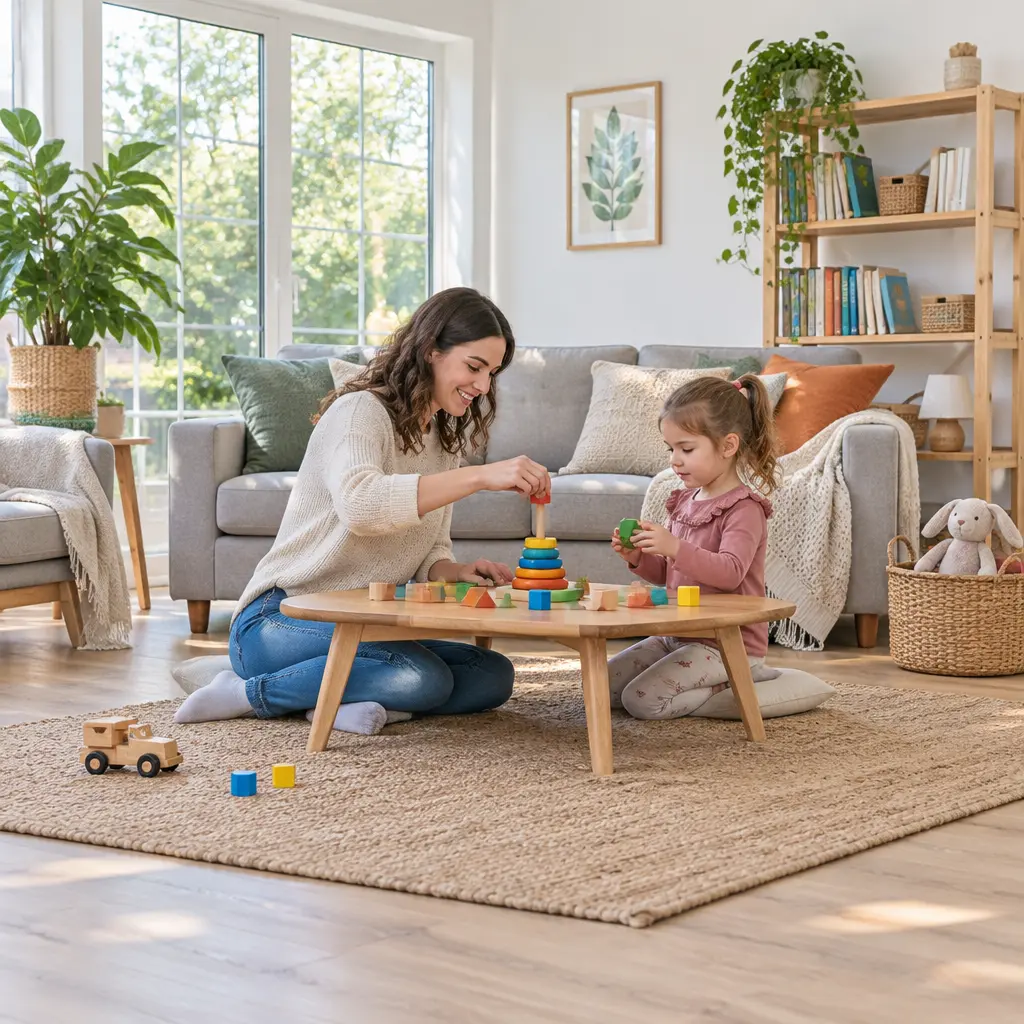
Embedding therapy in daily routines means helping people practice useful skills during ordinary activities—such as meals, dressing, play, schoolwork, and community outings—instead of relying only on separate therapy sessions. In early intervention and related services, this approach is often called routines-based intervention or natural-environment practice. It can make learning more relevant and easier to repeat: the U.S. Individuals with Disabilities Education Act (IDEA) requires early-intervention services, to the maximum extent appropriate, in natural environments, while the Division for Early Childhood recommends instruction in everyday activities and settings. Effective implementation starts with family priorities, selects a small number of functional goals, coaches caregivers or educators to use supportive strategies, and monitors progress without turning daily life into a sequence of drills.
Defines routines-based intervention as a therapy strategy
Routines-based intervention is the intentional use of familiar, recurring activities to support a person’s participation and learning. The routine supplies a meaningful context; a therapist or other trained provider identifies a goal, helps the learner practice it in that context, and supports the caregiver or educator in using strategies between visits. It is not simply asking families to do more therapy. The aim is to build useful skills into activities that already matter to the person and household.
IDEA Part C defines natural environments as settings that are natural or typical for same-aged infants and toddlers without disabilities. Its regulations state that early-intervention services must be provided in natural environments “to the maximum extent appropriate,” with a justification required when services cannot be achieved satisfactorily in those settings. The DEC Recommended Practices similarly emphasize access to learning opportunities in everyday activities, environments, and routines. These policies and professional recommendations make routine-based practice especially relevant in early childhood, although adapting daily activities can also support therapy goals for older children and adults.
The approach is individualized rather than tied to one therapy discipline. A speech-language pathologist may support communication at snack time; an occupational therapist may adapt dressing or play; a physical therapist may help a child practice movement during playground activities. The same routine can support several goals, provided the plan remains manageable and responsive to the learner.
Natural-environment intervention
Natural-environment intervention takes place where a person normally lives, learns, plays, or participates in the community. For an infant or toddler, that might mean practicing a gesture during a family meal, a movement skill at a park, or turn-taking while playing with a sibling. The setting is not automatically beneficial by itself: providers still need to choose an appropriate goal, adapt the activity when needed, and make sure the learner has genuine opportunities to participate.
Routines-based coaching
Routines-based coaching is a collaborative process in which a provider helps a caregiver or educator notice learning opportunities, select practical strategies, try them, and reflect on what happened. Rather than taking over an activity, the provider might demonstrate a brief communication prompt, invite the caregiver to practice it, and discuss whether it fit the family’s routine. Coaching supports the adult’s confidence and decision-making while keeping the learner’s engagement at the center.
Functional, participation-focused goals
A functional goal describes what a person will do in a meaningful situation, not only a skill performed in isolation. “Will request a preferred toy using a word, sign, or communication device during play” is more connected to daily participation than “will produce a target sound five times.” Specific, observable goals help families and providers decide what to practice and how to recognize progress. Goals should also respect the person’s communication preferences, sensory needs, culture, and priorities.
Selects daily routines that create useful learning opportunities
Once priorities are clear, the next step is to identify routines where the target skill naturally belongs. A routine need not happen at the same clock time every day; it should be familiar enough to offer repeated, meaningful opportunities. Providers and families can map the day, identify activities that are enjoyable or challenging, and choose one or two realistic places to begin.
Mealtimes and snacks
Meals can support communication, choice-making, social interaction, and fine-motor participation. An adult might pause before offering a preferred item so the learner has an opportunity to request it, offer a choice between two foods, or provide a stable utensil and positioning support. Mealtimes should not become coercive practice sessions: feeding concerns, swallowing risks, allergies, and nutrition needs call for appropriate clinical guidance, and the learner’s comfort and safety take priority.
Dressing, hygiene, and transitions
Self-care routines offer repeated opportunities to practice sequencing, movement, communication, and independence. A caregiver can allow extra time for the learner to pull up a zipper, choose clothing, point to the next step on a picture schedule, or signal that a break is needed. Breaking a task into manageable steps and adapting clothing, tools, or the environment can help participation without expecting the person to perform every step independently before they are ready.
Play, reading, and family interaction
Play and shared reading can create low-pressure opportunities for turn-taking, imitation, attention, language, and problem-solving. An adult can follow the learner’s interests, describe what is happening, wait for a response, and add a small challenge when the learner is ready. In a block-building game, for example, a child might practice requesting a piece, taking turns, or following a simple direction. The purpose is enjoyable interaction and participation, not constant testing.
School and community activities
Classroom arrival, recess, shopping, public transportation, and community recreation can help a person use skills with different people and materials. A team may coordinate cues and supports across home and school so that a learner can communicate a need, follow a routine, or join a group activity in more than one setting. Such coordination should protect privacy and avoid assuming that one strategy will work identically in every environment.
Builds strategies into routines without overwhelming families
Routine-based practice works best when it is feasible, respectful, and integrated into life rather than added as a demanding new workload. The CDC’s 2020 report on autism prevalence estimated that 1 in 36 eight-year-old children in the United States had been identified with autism, based on 2020 surveillance data from 11 sites. That figure describes one developmental condition, not the number of people receiving therapy, but it underscores the importance of accessible, coordinated supports for families. More broadly, the World Health Organization estimates that about 1.3 billion people—16% of the global population—experience significant disability, reinforcing the relevance of participation-focused supports across the lifespan.
Use a simple plan: priority, opportunity, strategy, review
A practical plan can be summarized in four steps. First, identify a priority that matters to the learner and family. Second, find a routine that offers a natural opportunity to work on it. Third, choose a strategy that is easy to understand and repeat, such as waiting, offering a choice, modeling a word or action, adapting a tool, or providing a visual cue. Finally, review what happened and adjust the plan. A brief note about participation or a successful attempt can be more useful than a complicated tracking sheet that no one has time to maintain.
Coach through observation and practice
Providers can begin by observing the routine and asking what the family would like to change. They can then explain or demonstrate a strategy, invite the caregiver to try it, and offer supportive feedback. The National Center for Pyramid Model Innovations describes practice-based coaching as a cyclical process involving shared goals, focused observation, and reflection and feedback. That framework is used in early-childhood professional development; it is not a guarantee of outcomes, but it offers a structured way to help adults use evidence-informed practices in real settings.
Adapt the amount of practice to the household
The best plan may involve a few well-chosen opportunities rather than practice in every routine. Families differ in time, energy, language, housing, access to equipment, and support networks. A strategy should fit those circumstances and should not make caregiving feel like a clinical assignment. If an activity becomes stressful, the team can simplify it, choose another routine, or pause and reassess the goal.
Coordinate across providers and settings
When several professionals are involved, a shared plan can prevent conflicting instructions and reduce repetition. With appropriate consent, providers and caregivers can agree on the priority skill, common cues, accommodations, and a simple way to share observations. Coordination is especially important when health, communication, mobility, or sensory needs affect participation. The learner and family should be able to ask questions and decline strategies that do not fit their values or circumstances.
Measures progress through participation and functional outcomes
Progress is not limited to whether a person performs a skill on demand during a therapy appointment. Teams can also consider whether the learner participates more comfortably, communicates more effectively, needs fewer prompts, uses a skill with another person, or has more choices in a routine. These observations connect intervention to everyday outcomes and can guide adjustments when a strategy is not helping.
Track a small number of observable indicators
Useful indicators might include the number of opportunities in which a learner initiates communication, the level of support needed to complete a step, or whether the person joins an activity for longer or with greater comfort. Record only information that helps the team make decisions. A short weekly reflection—what worked, what was difficult, and what to try next—may be more sustainable than detailed daily data collection.
Interpret evidence in context
One successful attempt does not necessarily establish lasting change, and a difficult day does not mean a strategy has failed. Sleep, illness, stress, sensory demands, unfamiliar people, and changes in routine can affect performance. Providers should consider patterns over time, discuss observations with the family, and distinguish a genuine lack of progress from a strategy that was not feasible or consistently available.
Use evidence without overstating certainty
Research and professional guidance support intervention that is individualized, embedded in meaningful contexts, and coordinated with caregivers, but effects depend on the learner, the target, the quality of implementation, and the available supports. IDEA regulations establish requirements for eligible early-intervention services; they do not mean every therapy activity must occur at home or that caregivers should replace trained clinicians. Families and providers should use current, discipline-specific evidence and revisit the plan when goals, needs, or circumstances change.
Applies routine-based strategies through practical examples
Consider a toddler whose family wants to make it easier for the child to request help. During play, the adult places a desired toy in a clear but reachable container, waits briefly, and responds to the child’s gesture, word, sign, or device-based message. The therapist helps the family choose a response that is accessible and natural, then checks whether the setup supports communication without creating frustration. The same request strategy can later be adapted to snack time or getting ready to go outside.
For a school-age learner practicing independence, a team might use a visual checklist for packing a bag. The student checks each item, asks for help when needed, and gradually uses fewer adult reminders. A caregiver and teacher can compare what works in each setting and adjust the checklist for the student’s reading, attention, or motor needs. In both examples, practice is brief, linked to a real goal, and embedded in an activity that already has a purpose.
A text-based comparison can help teams plan without treating routines as interchangeable: mealtime may offer repeated choices and requests; dressing may offer sequencing and motor practice; play may offer turn-taking and shared attention; community outings may offer communication and navigation with unfamiliar people. The most suitable routine is the one that offers a meaningful opportunity while remaining safe and manageable.
Conclusion: Embeds therapy strategies in meaningful everyday life
Routines-based intervention connects functional goals with natural environments, familiar activities, caregiver coaching, and progress monitoring. Its value lies not in turning every moment into therapy, but in making selected learning opportunities relevant, repeatable, and respectful of the learner’s priorities. IDEA requirements for early intervention and DEC guidance support natural-environment practice, while public-health data show the broad importance of accessible support for people with developmental differences and disabilities.
Families and providers can start by choosing one meaningful goal, identifying a routine where it naturally fits, and testing one manageable strategy. Review the learner’s comfort and participation, coordinate with the relevant professionals, and adjust when the plan adds stress or does not help. For further guidance, consult the child’s or adult’s care team, the relevant early-intervention program, and current discipline-specific professional recommendations.
Sources: U.S. Department of Education, Individuals with Disabilities Education Act, Part C Regulations, 34 CFR § 303.26 and § 303.126, https://sites.ed.gov/idea/regs/c/chapter-3/part-c/303-26; Division for Early Childhood, DEC Recommended Practices, 2014, https://www.dec-sped.org/dec-recommended-practices; Centers for Disease Control and Prevention, “Prevalence and Characteristics of Autism Spectrum Disorder Among Children Aged 8 Years—Autism and Developmental Disabilities Monitoring Network, 11 Sites, United States, 2020,” MMWR Surveillance Summaries, 2023, https://www.cdc.gov/mmwr/volumes/72/ss/ss7202a1.htm; World Health Organization, “Disability,” 2023, https://www.who.int/news-room/fact-sheets/detail/disability-and-health; National Center for Pyramid Model Innovations, Practice-Based Coaching, https://challengingbehavior.org/implementation/coaching/