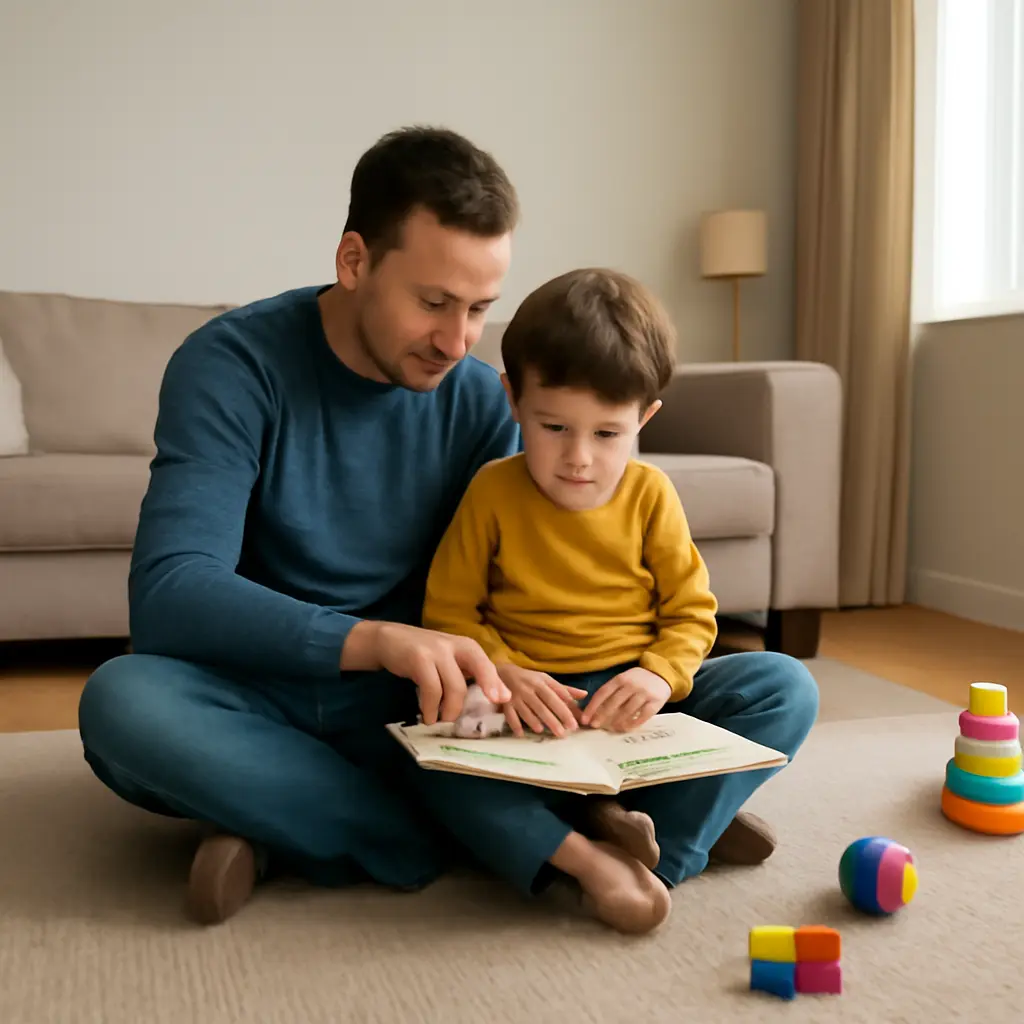
Word-building is the gradual process through which children learn to understand and use words, including how words sound, what they mean, and how they fit together. Parents can support it in everyday conversation, but common well-intentioned habits—such as correcting every mistake, relying on quizzes, or simplifying speech too much—can make practice less natural. Research-backed guidance from the American Speech-Language-Hearing Association (ASHA) and the National Institute on Deafness and Other Communication Disorders (NIDCD) points instead to responsive conversation, shared reading, and age-appropriate expectations. These approaches matter because language skills develop rapidly in early childhood, while children’s paths and timelines vary.
How everyday interaction shapes children’s word-building
Word-building is not simply memorizing a list of vocabulary. It includes learning word meanings, recognizing and producing speech sounds, combining words into sentences, and using language for social purposes. ASHA describes communication development as involving speech, language, hearing, and social communication—related areas that influence one another but are not interchangeable.
A useful distinction is between a child’s receptive language—what they understand—and expressive language—what they say or otherwise communicate. A child may understand a word before using it independently. The NIDCD notes that children’s language develops through interaction with people and their surroundings, and that milestones describe skills commonly seen by particular ages rather than serving as a diagnosis on their own.
The CDC’s developmental milestone checklists provide examples of skills expected for many children at specific ages, including communication skills. They are designed to help families track development and discuss concerns with a clinician, not to grade a child or replace professional screening. With that context, several common parenting habits are worth adjusting.
Mistake 1: Turning conversation into a constant quiz
A quiz-heavy interaction asks children to label objects repeatedly—“What’s that?” or “What color is it?”—without building on their answers. Occasional questions are useful, but too many can make talk feel like a test and leave little space for the child to lead.
Try commenting, waiting, and responding instead. If a child points to a bus, a parent might say, “Yes, a big blue bus is stopping.” The child hears the target word in a meaningful sentence and can respond without pressure. ASHA’s family guidance encourages adults to talk about what children are doing and to give them time to answer.
Mistake 2: Correcting every pronunciation or grammar error
A young child may say “goed” instead of “went” or simplify a difficult sound. These forms can reflect a developing understanding of language patterns, not carelessness. Repeatedly interrupting to demand a correction may shift attention away from the message and discourage participation.
Instead, recast the child’s words naturally. If the child says, “He goed home,” a parent can reply, “Yes, he went home.” This supplies a useful model while keeping the exchange friendly. Speech-sound development also varies: ASHA cautions that sounds are mastered at different ages, so a single mispronunciation should be considered in context rather than treated as proof of a disorder.
Mistake 3: Using speech that is too simplified—or too advanced
Some parents restrict themselves to isolated labels such as “ball” and “dog,” while others use long, complex explanations that are difficult for a child to follow. Neither extreme is necessary. Children benefit from language that is understandable but still introduces useful words and sentence patterns.
Follow the child’s focus and add a small amount of information. If a toddler says “truck,” an adult might say, “The red truck is carrying wood.” This kind of expansion connects familiar words to new vocabulary and grammar. ASHA recommends talking, reading, and playing with children using language that fits their developmental level, while continuing to offer richer language as they grow.
Mistake 4: Treating shared reading as a race through the text
Reading together can support vocabulary, comprehension, and conversation, but the benefit does not depend on finishing every page. When an adult rushes through the words, a child may miss opportunities to notice pictures, ask questions, or connect a story to personal experience.
Pause to name what is happening, explain an unfamiliar word, or invite the child to predict what comes next. The American Academy of Pediatrics promotes shared reading beginning in infancy as part of supportive relationships and early development. A 2019 meta-analysis in the journal Review of Educational Research found that shared-book-reading interventions had a positive average effect on children’s language development, while also noting that outcomes vary with the intervention and setting. Reading together is valuable; it is not a guarantee of a particular vocabulary size.
Mistake 5: Assuming screens can replace responsive conversation
A video or educational app may expose a child to words, but passive viewing is not the same as an adult noticing and responding to that child’s communication. Young children learn through shared attention, turn-taking, and real-world interaction as well as through what they hear.
The American Academy of Pediatrics’ media guidance emphasizes high-quality content, adult involvement, and protecting time for sleep, play, and interaction. When a screen is used, parents can watch together, talk about what is happening, and connect it to real objects or experiences. For infants and toddlers, screen use should not displace the back-and-forth communication that supports learning.
Mistake 6: Comparing children or expecting identical timelines
Children do not all acquire words and speech sounds at the same pace. Comparing siblings, classmates, or a child with online milestone stories can create unnecessary worry—or false reassurance. Milestones help identify when a conversation with a professional may be useful; they do not explain why a child is developing differently.
The CDC advises families to act early if a child is not meeting milestones, has lost skills, or a caregiver has concerns. A pediatrician can discuss development and screening, and a speech-language pathologist can evaluate communication skills. If hearing is a concern, ask about a hearing assessment: hearing differences can affect speech and language learning, and only appropriate evaluation can establish whether they are involved.
How parents can build words through everyday routines
The most useful alternative to these mistakes is not a formal lesson plan. It is frequent, warm interaction that follows a child’s attention and gives them chances to communicate. Mealtimes, dressing, errands, bath time, and play all provide natural opportunities to hear and use words.
- Follow the child’s focus, then name or describe what they are looking at.
- Use short turns: say something, pause, and give the child time to respond with words, sounds, gestures, or signs.
- Expand what the child says by adding one or two meaningful details.
- Repeat favorite books and songs; familiar repetition can make words easier to notice and anticipate.
- Use the language or languages you speak comfortably. Rich, responsive communication matters more than avoiding a family language.
- Celebrate attempts to communicate without making every exchange depend on perfect pronunciation.
For example, during a walk a child might point at a bird. A parent can respond, “You found a bird. It’s hopping under the bench,” then pause. The child may point again, imitate a sound, or say a word. The adult can build on that response—“Yes, the bird is looking for food”—turning a brief moment into a shared exchange.
Conclusion: supportive word-building starts with connection
The most common word-building mistakes are often understandable: quizzing too often, correcting every error, oversimplifying or overloading speech, rushing through books, relying on screens, and comparing children’s timelines. ASHA, the NIDCD, the CDC, and the American Academy of Pediatrics all support a broader view of development in which communication grows through responsive interaction, while milestones guide—not replace—professional judgment.
Parents can make a meaningful difference by talking, listening, reading, playing, and responding during ordinary routines. If a child loses skills, misses milestones, or leaves a caregiver concerned, discuss it with a pediatrician and ask whether developmental, hearing, or speech-language evaluation is appropriate. For further guidance, consult the CDC’s milestone resources and ASHA’s communication-development materials.
Sources: American Speech-Language-Hearing Association, “Communication Milestones: Birth to 1 Year,” https://www.asha.org/public/developmental-milestones/communication-milestones-birth-to-1-year/; American Speech-Language-Hearing Association, “Communication Milestones: 1 to 2 Years,” https://www.asha.org/public/developmental-milestones/communication-milestones-1-to-2-years/; Centers for Disease Control and Prevention, “Act Early: Learn the Signs. Act Early,” https://www.cdc.gov/act-early/; National Institute on Deafness and Other Communication Disorders, “Speech and Language Developmental Milestones,” https://www.nidcd.nih.gov/health/speech-and-language; American Academy of Pediatrics, “Literacy Promotion: An Essential Component of Primary Care Pediatric Practice,” https://publications.aap.org/pediatrics/article/134/2/404/32947/Literacy-Promotion-An-Essential-Component-of; Dowdall et al., “Shared Picture Book Reading Interventions for Child Language Development: A Systematic Review and Meta-Analysis,” Review of Educational Research, 2019, https://journals.sagepub.com/doi/10.3102/0034654319853412; American Academy of Pediatrics, “Media and Young Minds,” https://publications.aap.org/pediatrics/article/138/5/e20162591/60321/Media-and-Young-Minds.